How to Get into IVF Fellowship: What Actually Matters?
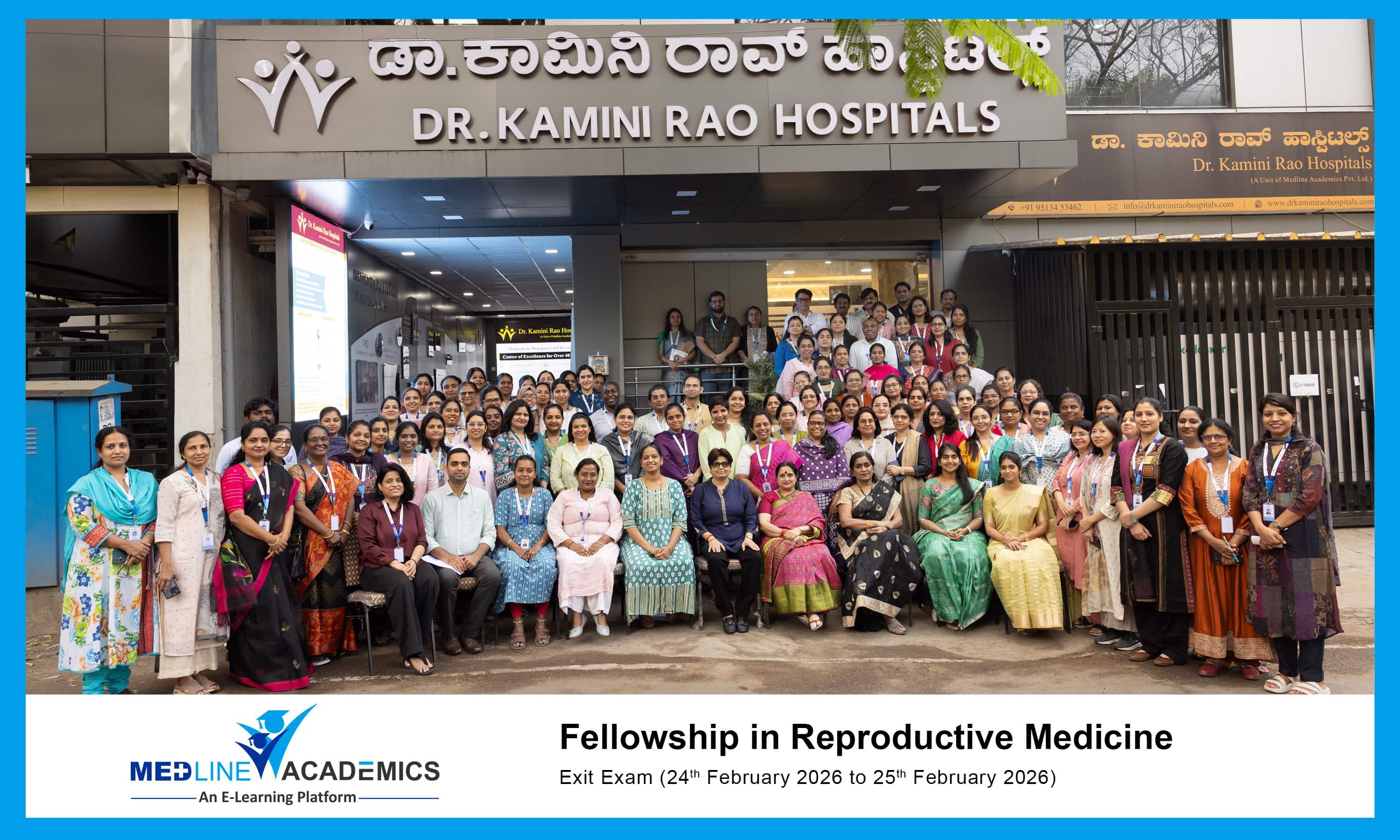
If you’re planning to pursue a career in reproductive medicine, you’ve probably already realised that getting into a fellowship in IVF in India isn’t just about ticking boxes. There is research, indeed. There is your curriculum vitae, certainly. However, beyond these factors, there is a further level of decision-making that is not necessarily obvious to the applicant at the outset of the preparation. A thorough discussion between program directors and fellows leads to the realization that, in truth, this is a very personal, very nuanced decision, far more so than most applicants anticipate.
Technically, the process is structured.
Applications are submitted around May, interview invites are sent in June, and interviews continue over the next couple of months. Everything is organised, at least on paper.
But for applicants, this period often feels rushed.
You are juggling your duties, trying to finalize documents, juggling dates for interviews, and making decisions that will shape the direction of the next several years of your life. Even something as mundane as scheduling interviews used to be a process that included negotiating call duties and travel. While technology has made virtual interviews much easier, the stakes of making the right choice remain the same.
One of the most honest takeaways from the discussion was this:
People don’t choose programs the way you think they do.
It’s not always about prestige or ranking.
For some people, geography is a big issue - family, a significant other, kids. For others, it's the type of training they want. Some want a lot of surgical exposure, while others want a lot of research or lab work. And sometimes it is the little things too. Being able to go home from the hospital with relative ease. Living in a city that both of you want. Finding a place where you want to live outside of the hospital.
At this stage in the process, work is not the only factor in career decisions, but also aspects of one’s personal life and one’s personal values. This is a theme that has come up a number of times, and it is a very important one. A common mistake that applicants fall into is trying to create a resume or CV that is absolutely, utterly ‘perfect’ on paper, meaning one that is well-balanced, well-rounded, and strong in every possible way. They are not. No one expects you to be:
1. The best surgeon
2. A top-level researcher
3. A leader
4. And everything else at once
What they’re looking for is clarity.
· What are you genuinely good at?
· What do you enjoy?
· Where are you likely to excel?
It’s far more convincing to present clear strengths than to appear average across everything. There’s a tendency to overthink applications, to try and guess what programs want to hear.
But the advice from the panel was surprisingly straightforward:
Be yourself. Just make sure it’s your best, most polished version.
That means:
· No unnecessary exaggeration
· No artificially “created” achievements
· No trying to sound like someone you’re not
Presentation still counts, even today. The smallest of details, such as spelling mistakes, unclear descriptions of roles, or vague descriptions, may lead to an impression that the application was thrown together in a hurry. It’s not about being flawless; it’s about showing that you cared enough to get it right. This, of course, is a pitfall that many applicants fall prey to. The idea of going after a recommendation from a well-known name might be a smart move, but it’s not always so.
Program directors can easily tell:
· Who actually knows you
· And who is simply endorsing your CV
A well-written, detailed letter from someone who has worked closely with you, and who has a deep and thorough understanding of the way you think, the way you work, and the way you relate to patients, is much more valuable. In fact, it is worth noting that even a single such letter can make a big difference. It is also worth noting that not all residency programs offer good exposure to Fellowship in Reproductive Medicine in India. And yes, the lack of such exposure does make you feel like you're at a disadvantage. But it’s not a deal-breaker. What matters more is how you respond to that gap.
For many aspiring fertility specialists, especially in India, it is often seen that training and mentorship can play a significant role in affecting their approach to this process. Sites such as Medline Academics are designed to address this need by offering practical training in reproductive medicine. By focusing on both theory and practical experience, applicants can benefit from a better understanding of the field and a more direction-driven approach.
Some practical ways applicants have worked around this:
- Seeking out away rotations
- Attending conferences or smaller regional meetings
- Connecting with practitioners in the field
- Getting involved in related areas like endocrinology or PCOS clinics
What programs are really looking for is initiative.
· You don’t need to have the absolutely perfect setup in place right from the start. What you need to show is that you have genuinely made an attempt to explore the field and get a glimpse of its realities, even with a few limitations. Most often, you won’t get a complete and perfect picture from a program’s website. Hence, it is important for you to go a bit deeper on your own. One of the simplest but most effective strategies is to go through the publications. As you go through them, you will begin to see important patterns. Some programs are big on surgery, some are big on embryology, some are big on genetics, and some are big on research. Apart from going through literature, it is also important for you to have a word with people. Talking to a person who has already gone through a similar experience, even on a casual note, can be extremely beneficial. This, perhaps, is something you need to remember most. You are not applying for a program with the sole purpose of getting in. They are also trying to get a glimpse of you and your potential. They are looking for:
· Whether you’ll fit into their environment
· Whether your goals align with what they offer
· Whether you’ll thrive there
And that is precisely the reason why aspects such as your personal statement, the story you tell, and the clarity of purpose you express are so important. The journey of applying for a fellowship is a daunting one, especially when you are striving to do everything “right.” However, if there is one thing that rises above the rest of the advice and counsel you might receive, it is this: you do not have to aspire to anything perfect; you must aspire to clarity. Be clear about what you want to achieve. Be clear about what you have already achieved. And be honest about where you are going next. Because in the end, it is this honesty and clarity that others will remember.
Dr. Kamini Rao Hospitals is regarded as a premier IVF Center in Bangalore. It is renowned for its medical expertise and patient-centric approach in the field of fertility treatment. It was founded by the renowned IVF pioneer in India, Dr. Kamini Rao. The hospital promises a combination of the latest reproductive technologies with a personal approach. It has gained a reputation over the years for treating complex cases of infertility while maintaining high ethical standards and transparency.

 Arabic
 French
 Spanish
 Portuguese
 Deutsch
 Turkish
 Dutch
Dutch
 Italiano
 Russian
 Romaian
 Portuguese (Brazil)
 Greek
Greek