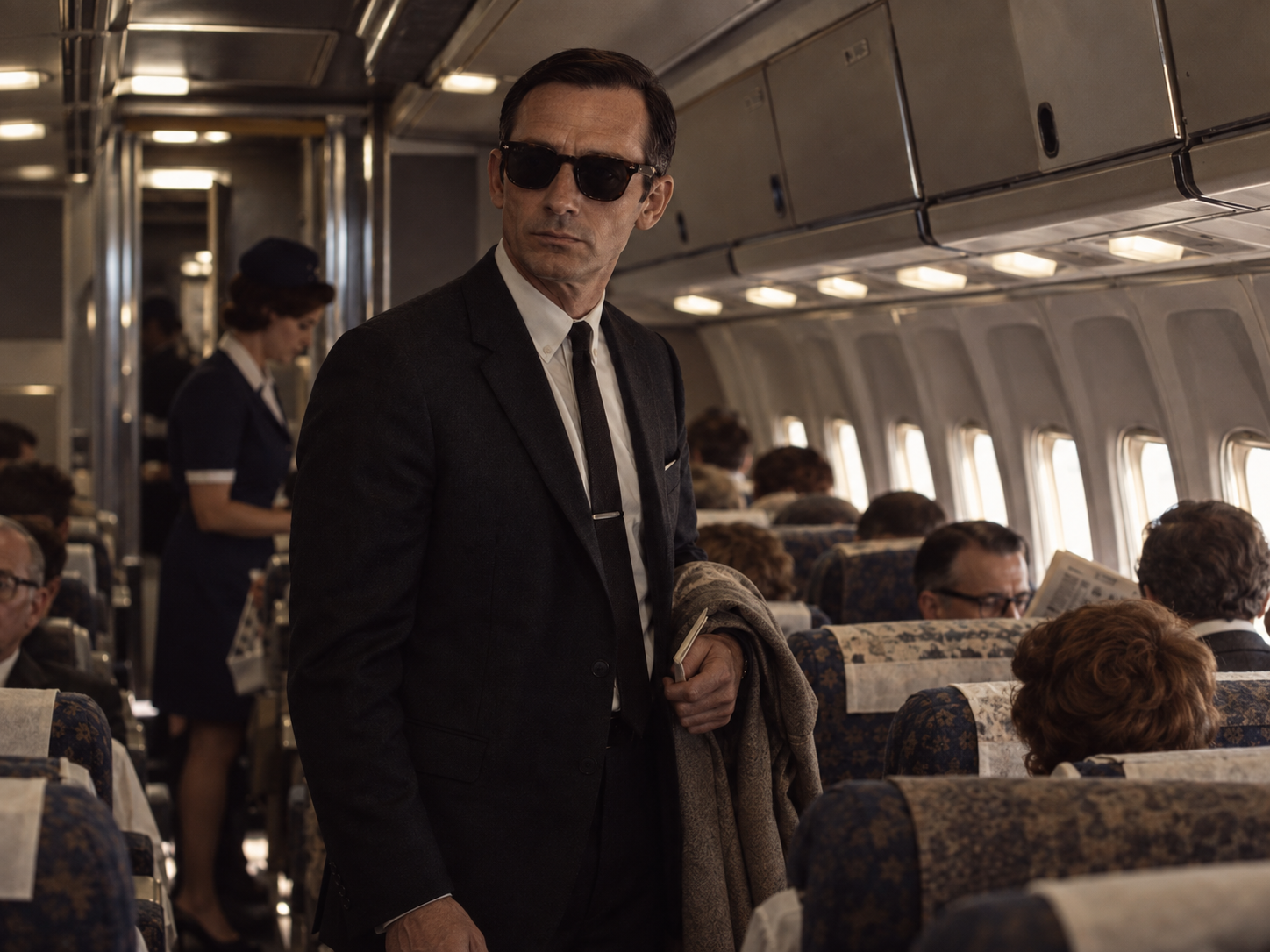
D. B. Cooper (Dan Cooper Hijacker)
On November 24, 1971, an unidentified man purchased a one-way ticket from Portland to Seattle using the name Dan Cooper. Witnesses described him as a calm, middle-aged man in a dark business suit, white shirt, black tie, raincoat, and loafers, carrying an attaché case. He boarded Northwest Orient Flight 305 and soon revealed that he was hijacking the aircraft. Although the press popularized the name D. B. Cooper, that was not the name he actually used.
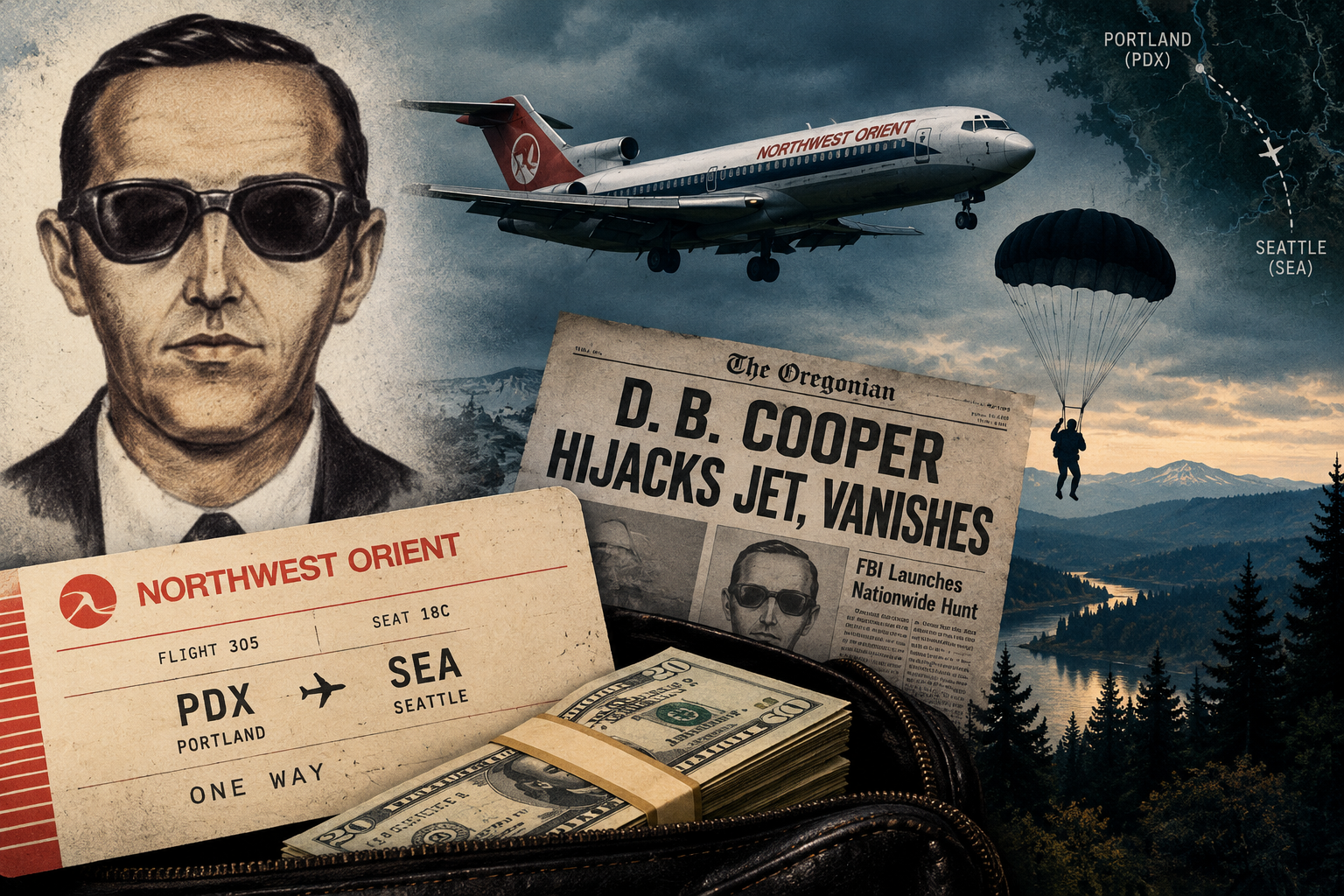
Dan Cooper One-Way Airline Ticket
The hijacker purchased a one-way ticket with cash for the short route from Portland, Oregon, to Seattle, Washington. The ticket carried the name Dan Cooper and became one of the earliest documented pieces of the case. Its importance lies not in physical complexity, but in the fact that it preserves the identity the hijacker chose for himself. It also reflects how easily a person could board a commercial flight in the pre-screening era.
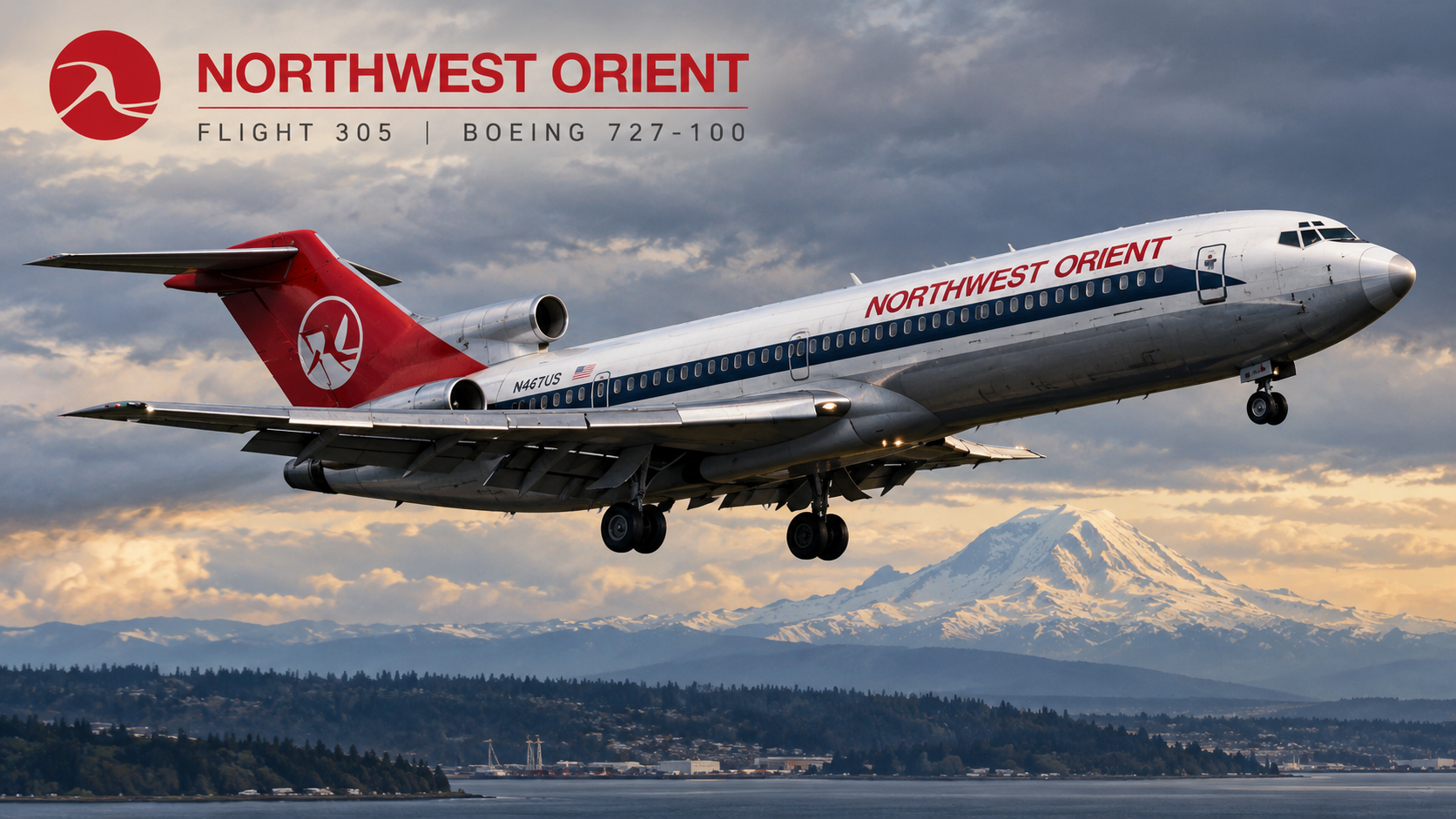
Northwest Orient Flight 305 Boeing 727
Northwest Orient Flight 305 was a scheduled passenger flight from Portland to Seattle on Thanksgiving Eve in 1971. The aircraft was a Boeing 727, a model that would later become central to the case because of its unusual rear airstair. What should have been a routine, short flight became one of the most famous unsolved hijackings in modern history. The plane itself is a key part of the mystery because Cooper's escape plan depended heavily on its design.
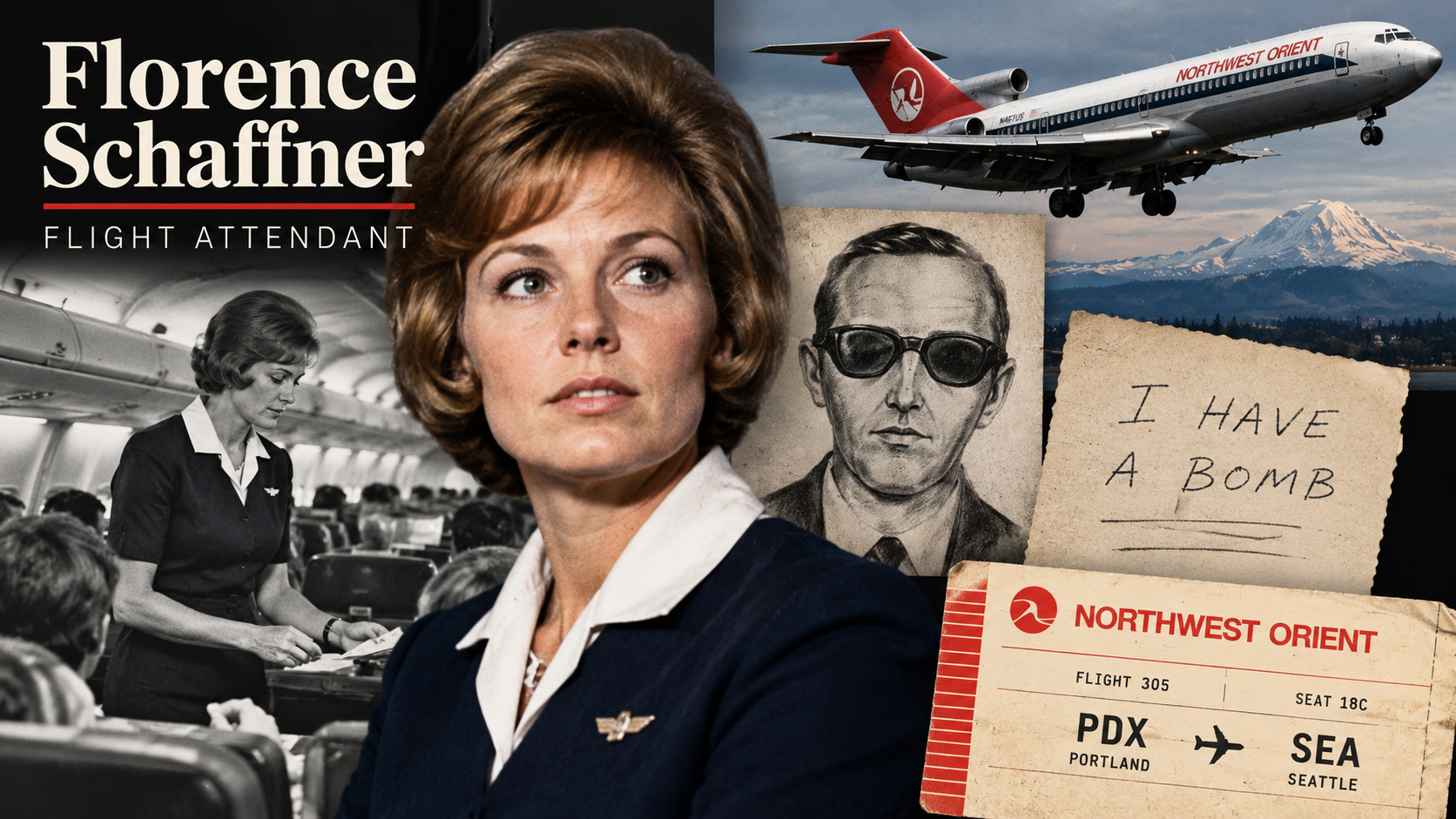
Florence Schaffner Flight Attendant
Florence Schaffner was one of the flight attendants aboard Flight 305 and one of the first people to interact directly with Cooper. Shortly after takeoff, he handed her a note that at first seemed like it might be an ordinary message. He then told her she should read it. Her recollections helped investigators reconstruct the opening moments of the hijacking and develop an early description of the man responsible.
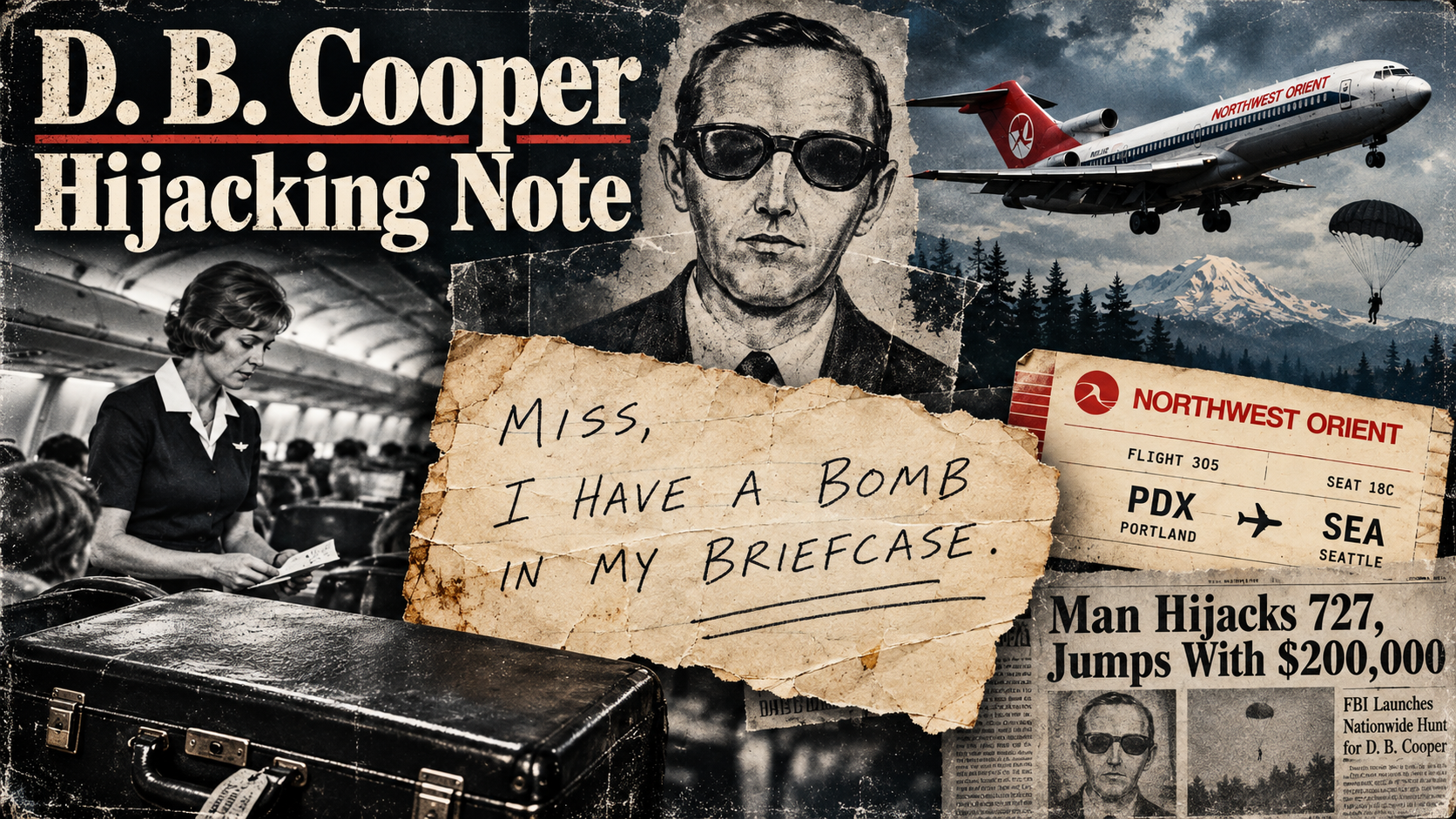
D. B. Cooper Hijacking Note
The handwritten note Cooper passed to Florence Schaffner stated that he had a bomb and instructed her to sit beside him. It was one of the most important objects in the entire event, but it did not remain available as evidence because Cooper took it back. As a result, the note survived only through witness recollection rather than through forensic examination. That lost opportunity has always been one of the frustrating features of the case.
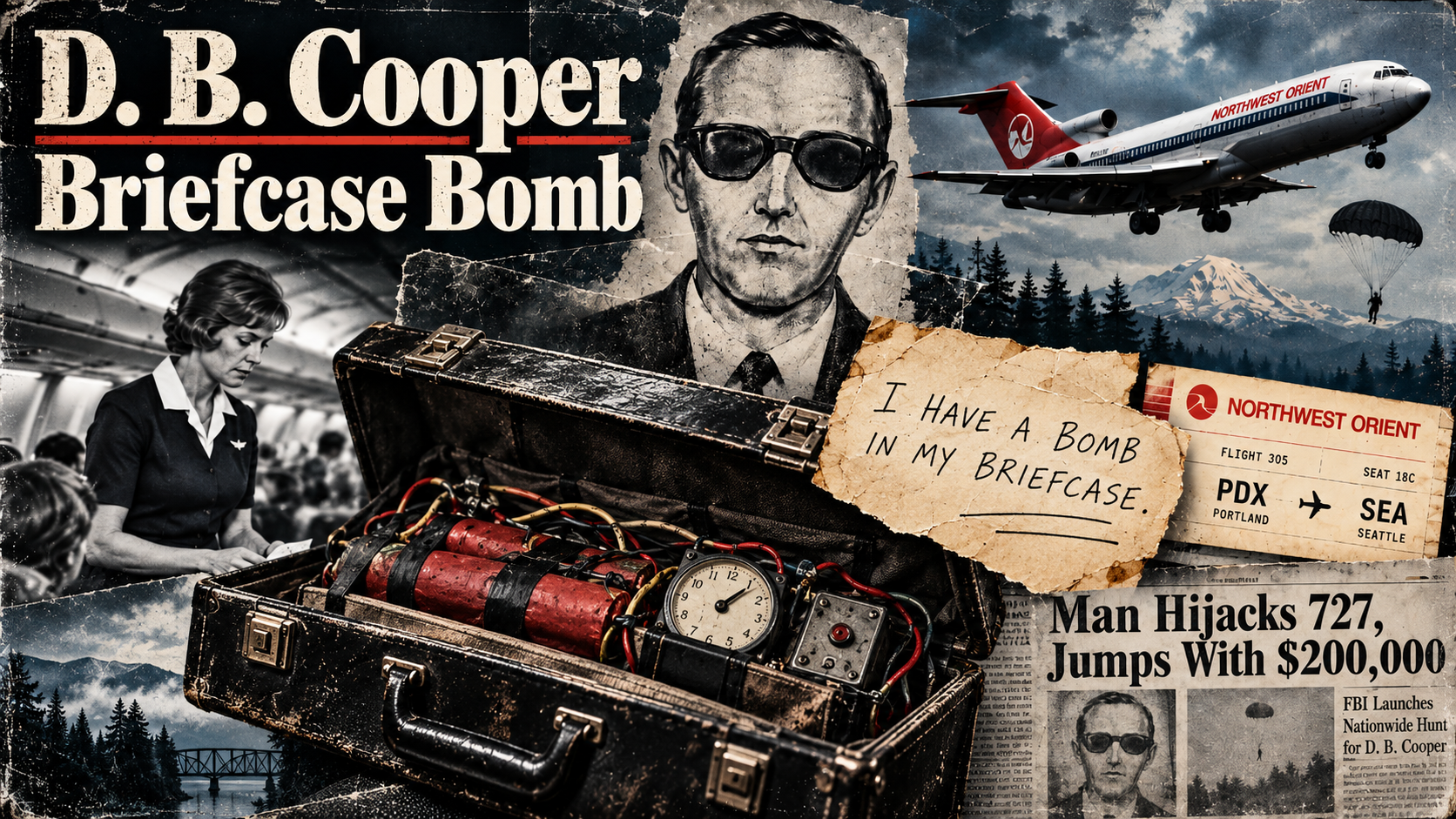
D. B. Cooper Briefcase Bomb
Cooper opened his attaché case enough for a flight attendant to see what appeared to be red cylinders, wire, and a battery. He represented the contents as a bomb and used that threat to control the aircraft and the crew. Because the device was never recovered, investigators could not determine whether it was a genuine explosive or a convincing fake. The uncertainty around the device remains one of the central questions of the case.
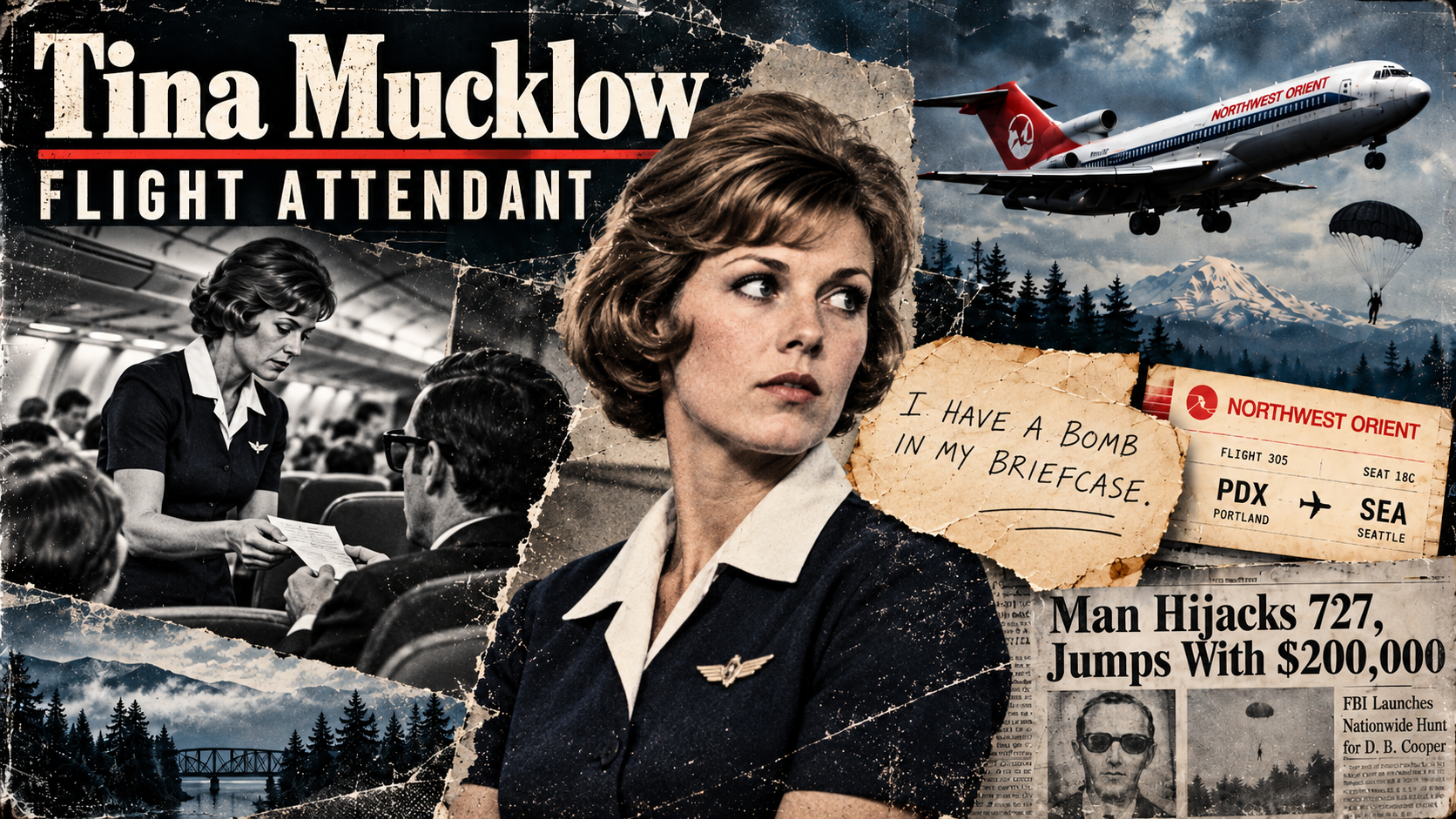
Tina Mucklow Flight Attendant
Tina Mucklow was another flight attendant aboard Flight 305 and spent extensive time in close proximity to Cooper during the hijacking. She became a key intermediary between the hijacker and the cockpit while the event unfolded. Because she spent so much time near him, her observations became especially valuable to investigators. Her description of Cooper's behavior helped shape the public image of the hijacker as calm, deliberate, and composed.
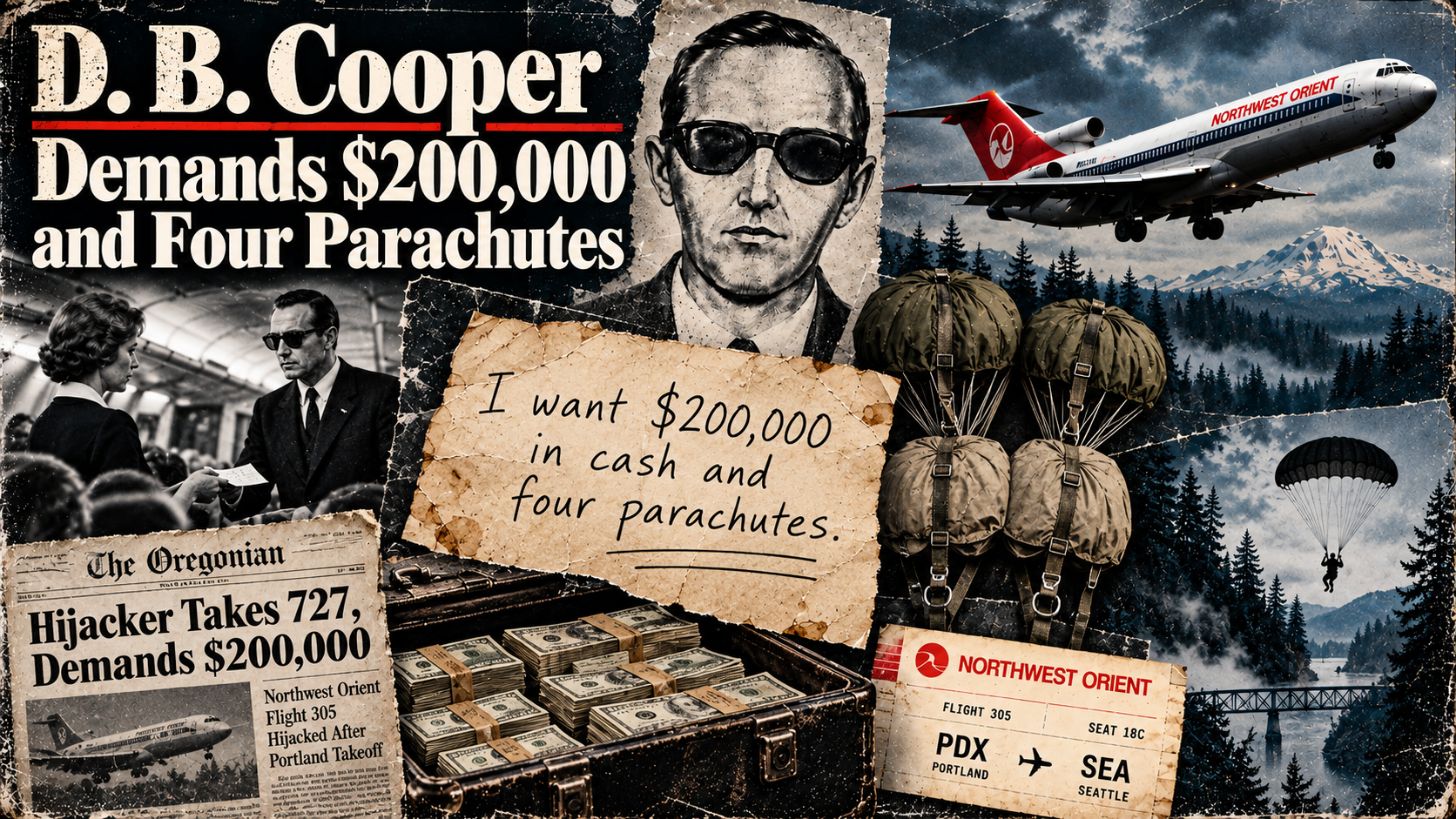
D. B. Cooper Demands $200,000 and Four Parachutes
Cooper demanded $200,000 in twenty-dollar bills along with four parachutes: two main parachutes and two reserves. He also required that the aircraft be refueled once it reached Seattle. The request for multiple parachutes was especially important because it made authorities reluctant to sabotage the equipment, fearing he might force a hostage to jump with him. The recorded serial numbers of the ransom bills would later become a major evidence trail.
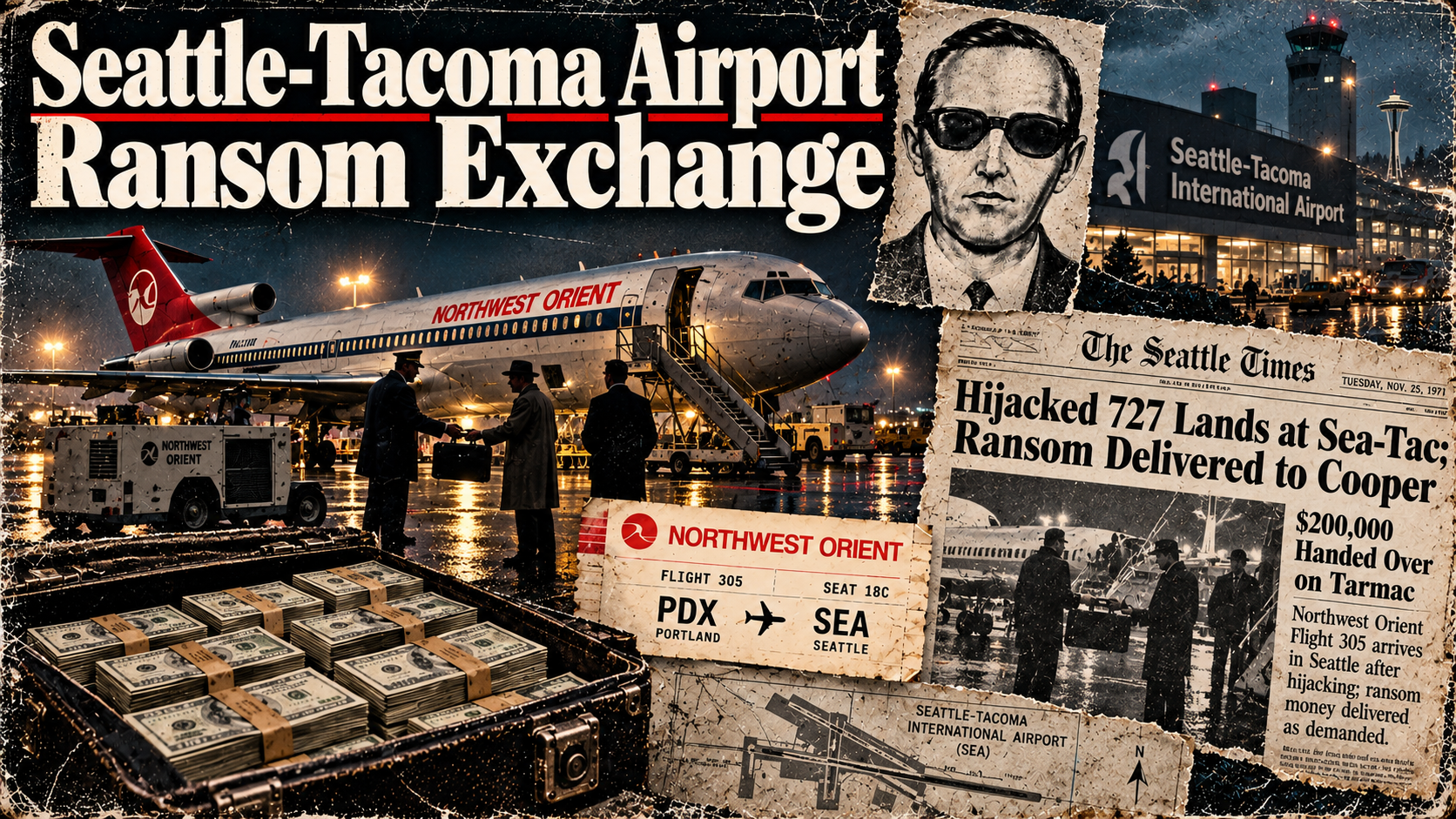
Seattle-Tacoma Airport Ransom Exchange
Flight 305 landed at Seattle-Tacoma International Airport while authorities assembled the requested ransom money and parachutes. Once the money and equipment were delivered, Cooper released the passengers and allowed most of the cabin crew to leave. A smaller flight crew remained aboard for the second stage of the hijacking. This airport exchange turned an onboard threat into a strange, escalating airborne extortion case.
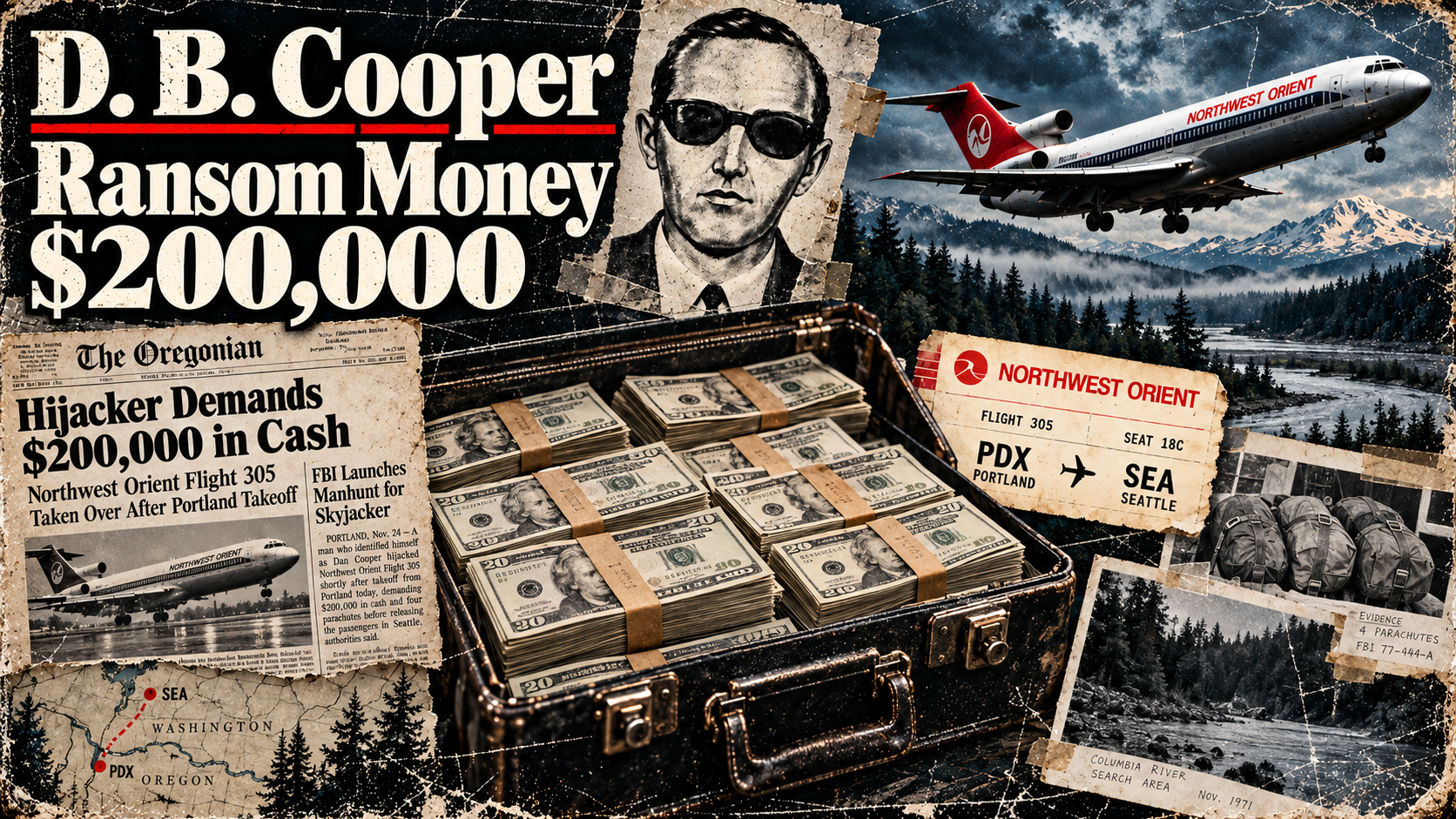
D. B. Cooper Ransom Money $200,000
The ransom consisted of $200,000 in twenty-dollar bills, totaling 10,000 individual notes. Investigators recorded the serial numbers before delivery, creating one of the most important evidence sets in the entire case. The money was essential to Cooper's plan, yet its later disappearance only deepened the mystery. Decades later, only a small portion of it would ever be conclusively recovered.
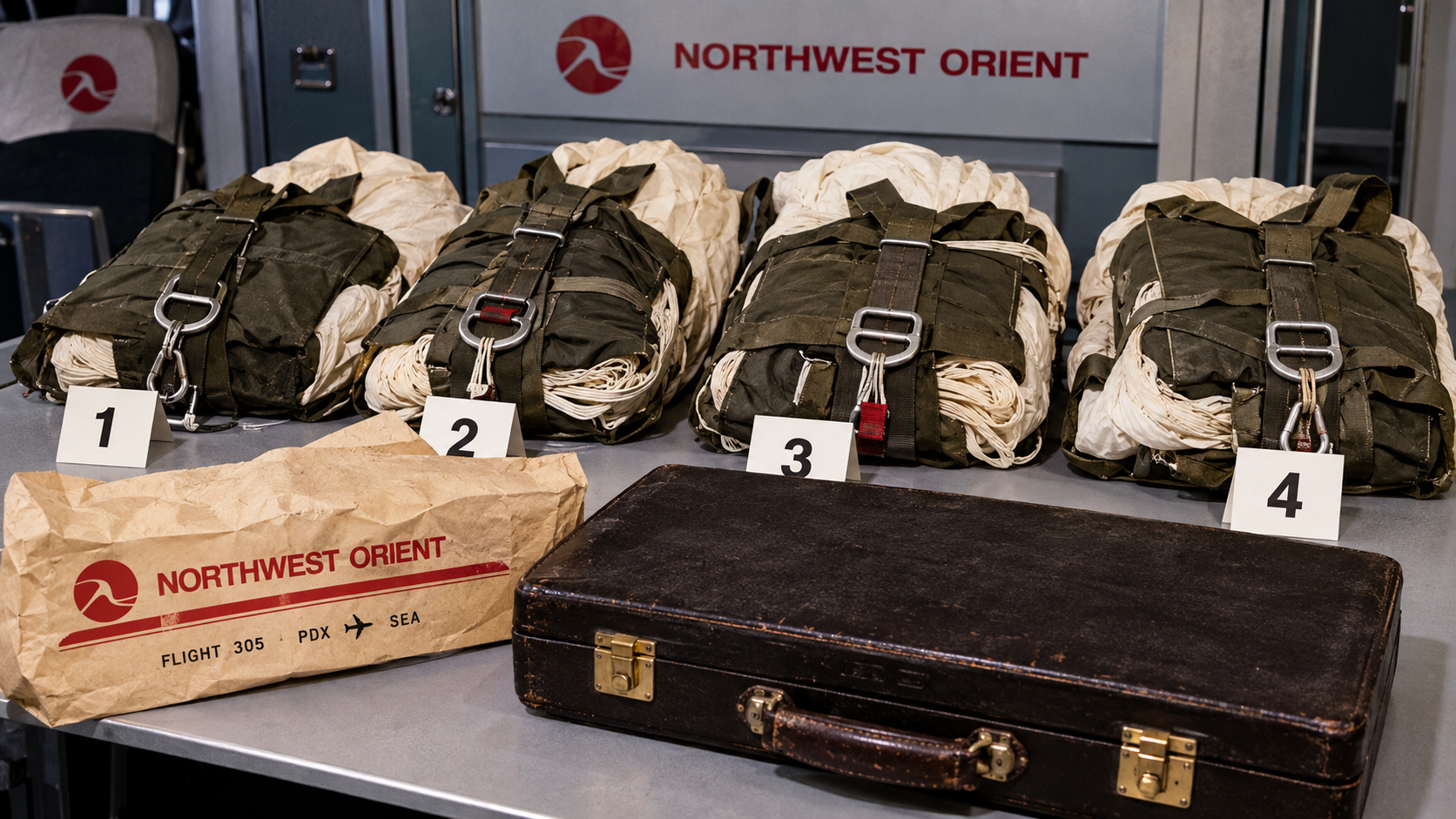
The Four Parachutes Delivered to Cooper
Four parachutes were delivered to Cooper in Seattle as part of the ransom exchange. He ultimately departed with a main parachute and another parachute-related item, while other equipment remained on the aircraft. One reserve chute that had been supplied was actually a training parachute sewn shut, a detail that later shaped discussion about Cooper's expertise. Cooper also cut parachute cord from the equipment left behind, apparently to help secure the ransom.
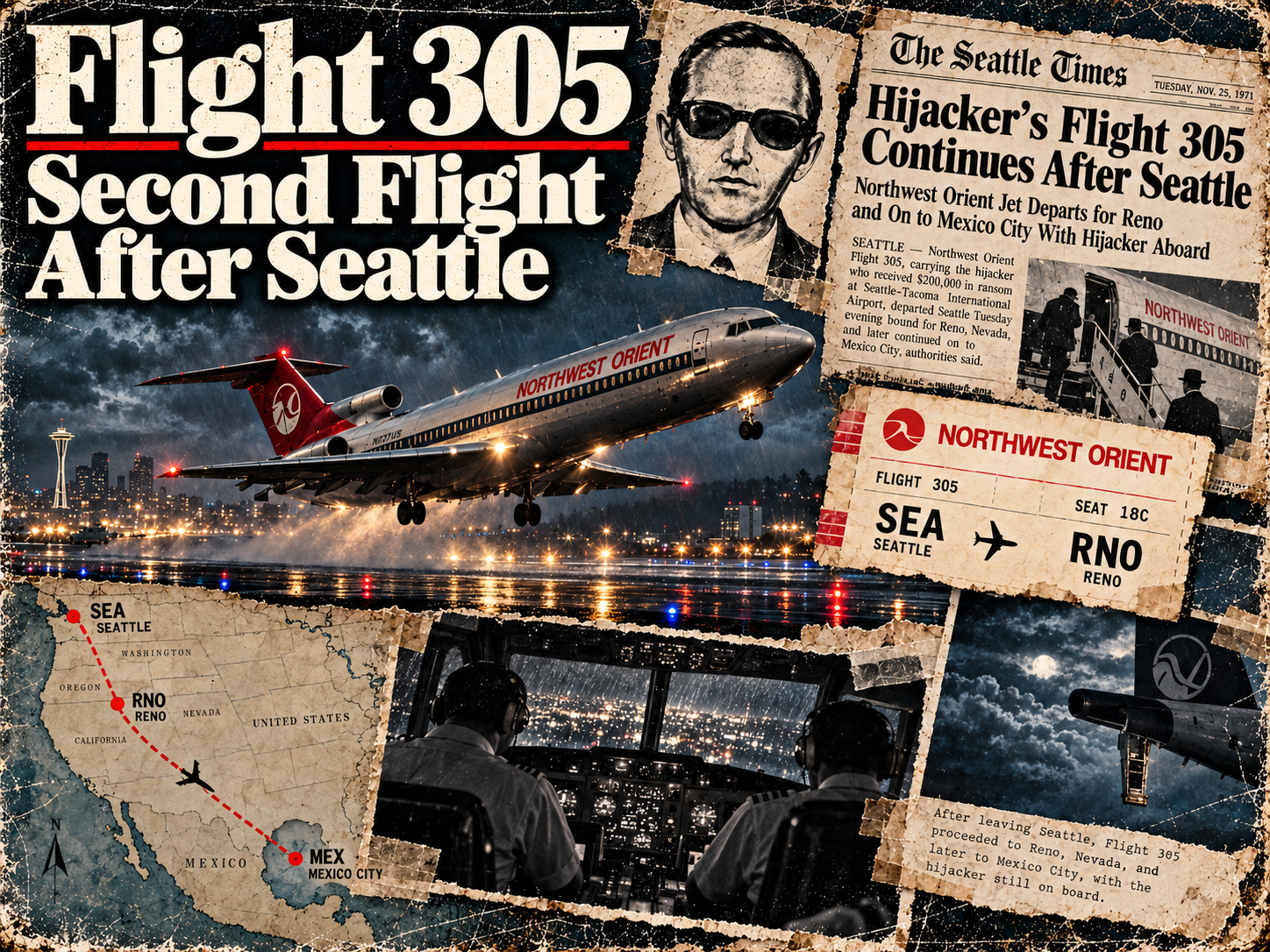
Flight 305 Second Flight After Seattle
After receiving the money and parachutes, Cooper ordered the Boeing 727 back into the air with a reduced crew. He instructed that the plane head south and operate under unusual flight conditions that he believed suited his escape plan. Once the aircraft left Seattle for the second time, there were no passengers left to witness what happened in the rear cabin. The case entered its most mysterious phase during this leg of the flight.
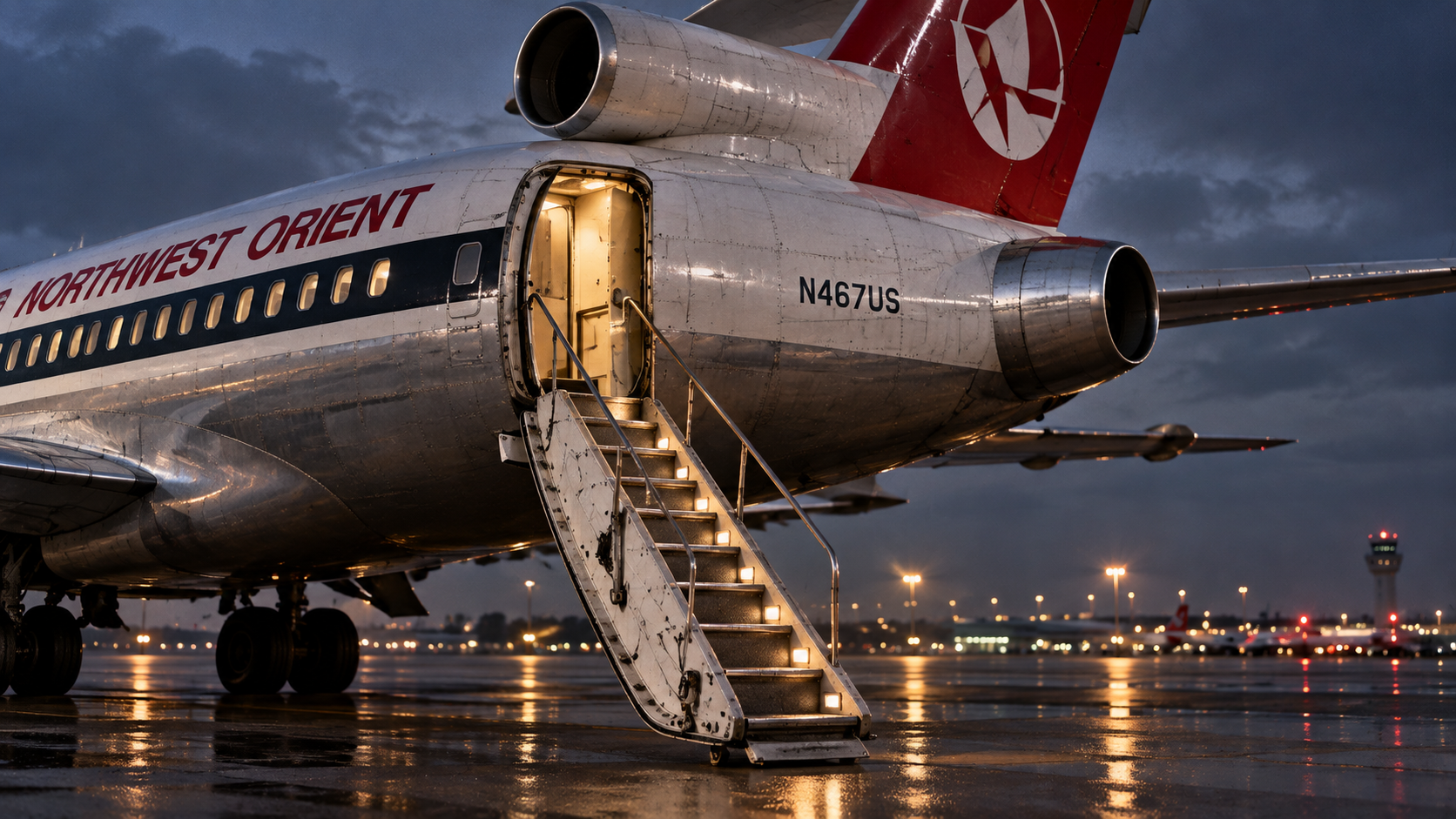
Boeing 727 Rear Airstair
The Boeing 727 had a distinctive rear airstair beneath the tail that could be lowered during flight. Cooper's escape plan depended on this feature, which allowed a person to leave the aircraft from the rear without passing close to the engines. His apparent awareness of this design has fueled decades of speculation about whether he had aviation, military, airline, or technical knowledge. The airstair remains one of the most iconic mechanical details of the case.
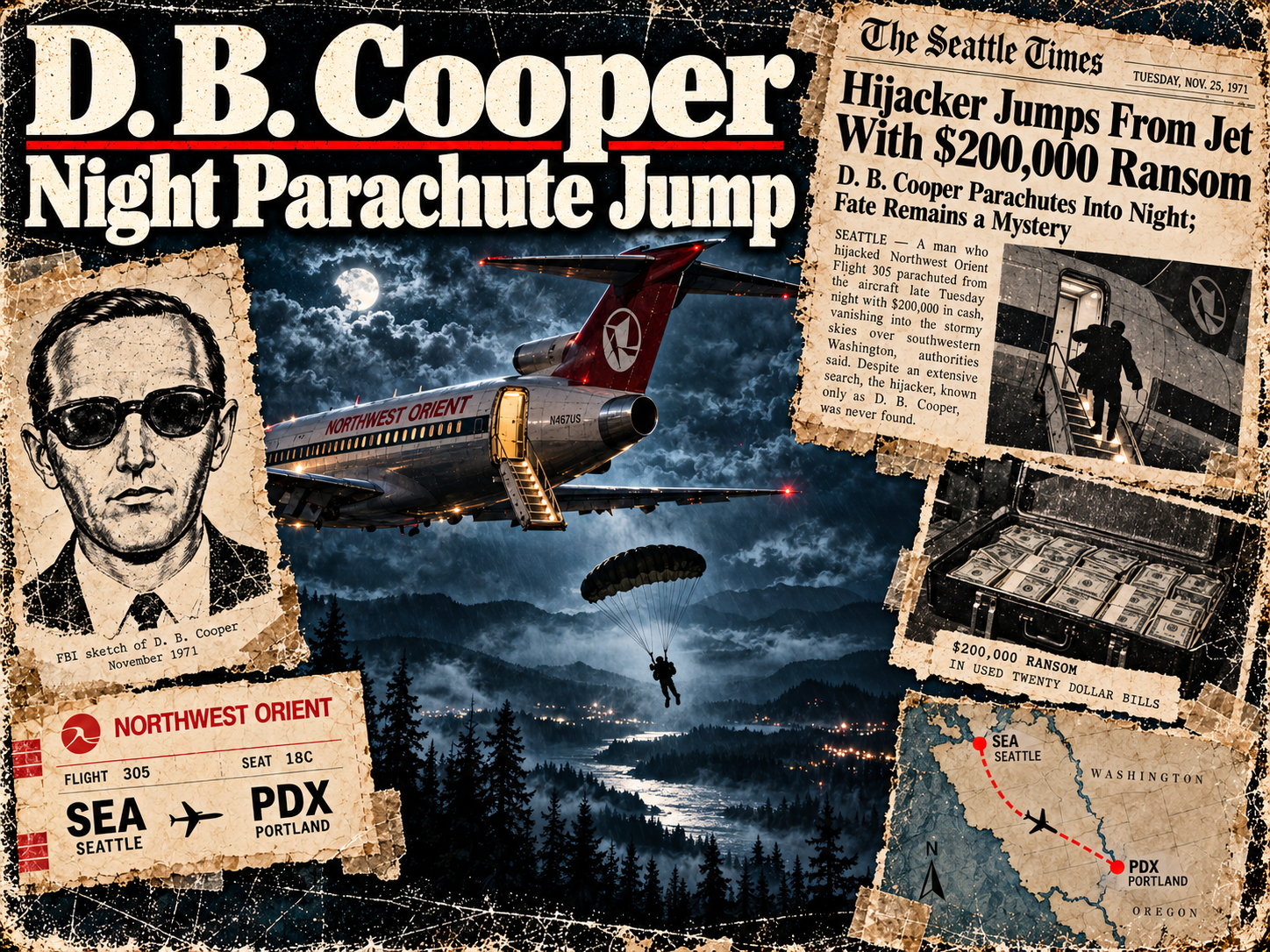
D. B. Cooper Night Parachute Jump
A little after 8:00 p.m. on November 24, 1971, Cooper is believed to have left the Boeing 727 through the rear airstair while the aircraft was in flight over the Pacific Northwest. It was dark, cold, rainy, and the terrain below included forest and rough country. No crew member actually saw him jump, so the event is reconstructed from changes aboard the aircraft and his absence at the end of the flight. This is the point where a documented hijacking turns into an enduring mystery.
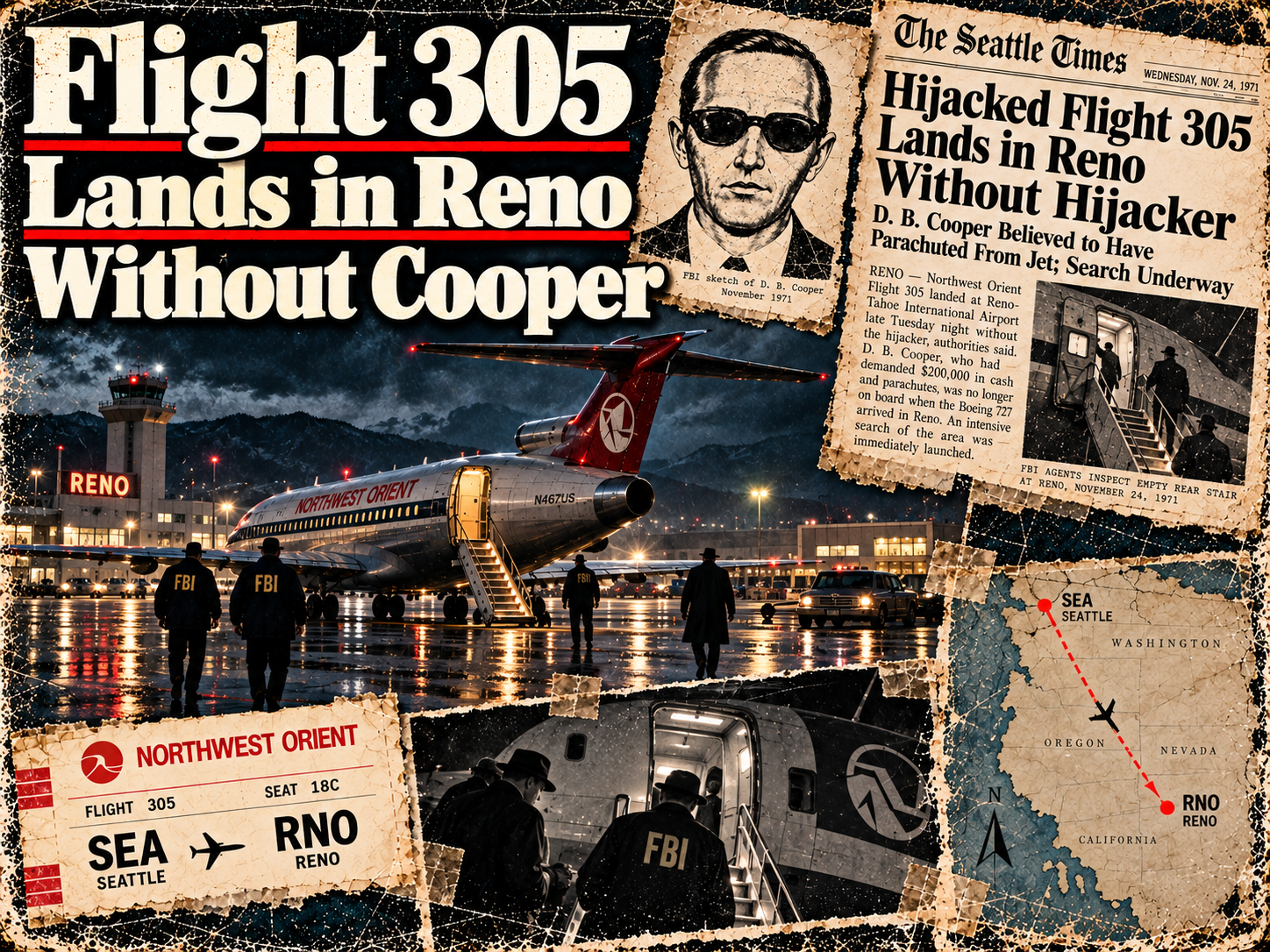
Flight 305 Lands in Reno Without Cooper
The aircraft eventually landed safely in Reno, Nevada, where authorities searched it and began collecting the evidence left behind. Cooper was gone. Also missing were the bulk of the ransom money, the parachute he apparently used, and the briefcase bomb or imitation bomb. The empty aircraft provided confirmation that he had escaped the cabin, but it did not reveal what happened next.
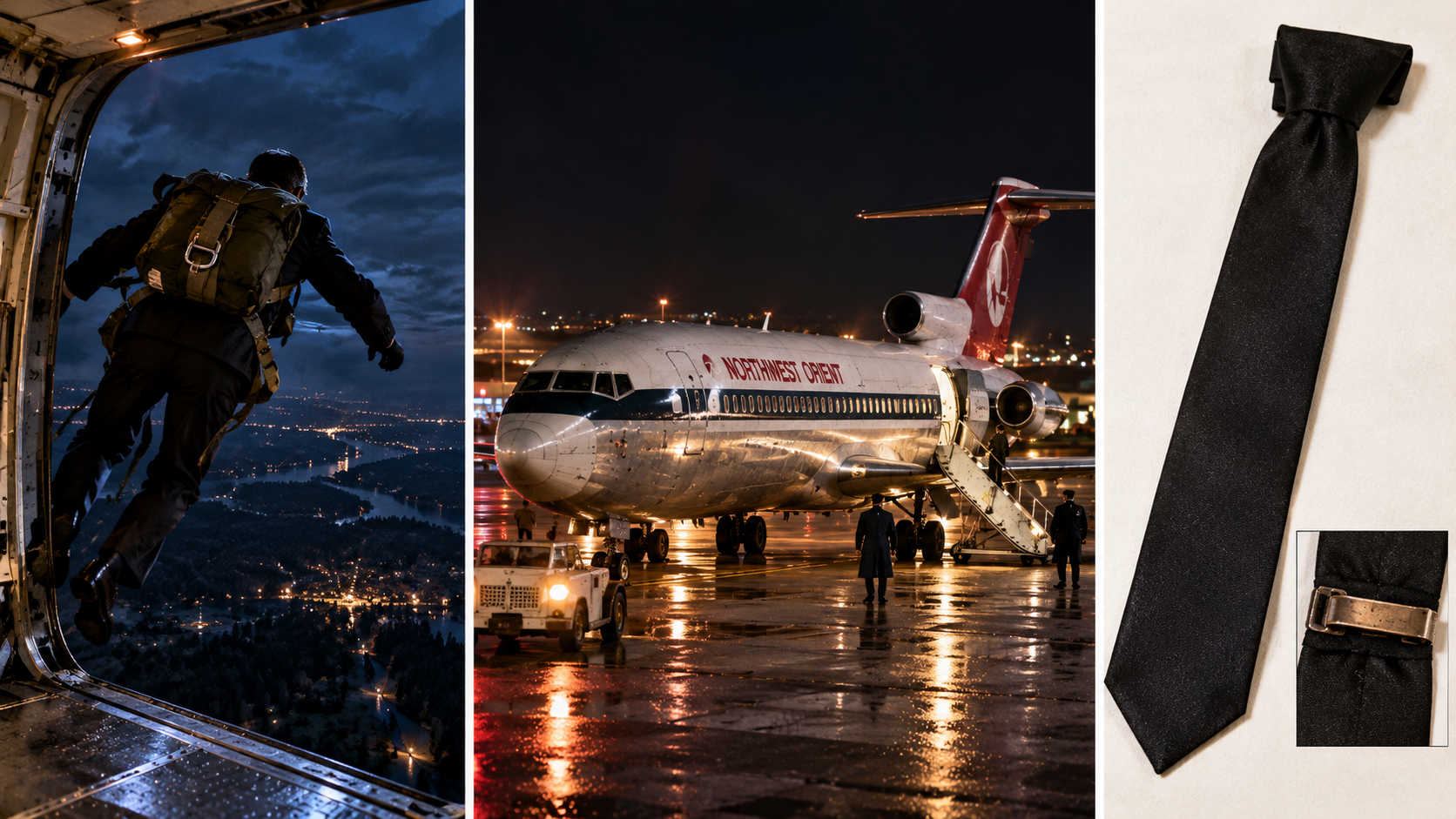
D. B. Cooper Black Clip-On Tie
One of the most important surviving artifacts from the hijacking is the black clip-on tie Cooper left behind on the aircraft. Unlike the money, parachute, and attaché case, the tie remained available for later forensic study. Over the years it has been examined for DNA and microscopic particles that might reveal something about Cooper's background or workplace. The tie remains a physical anchor in a case dominated by missing evidence.
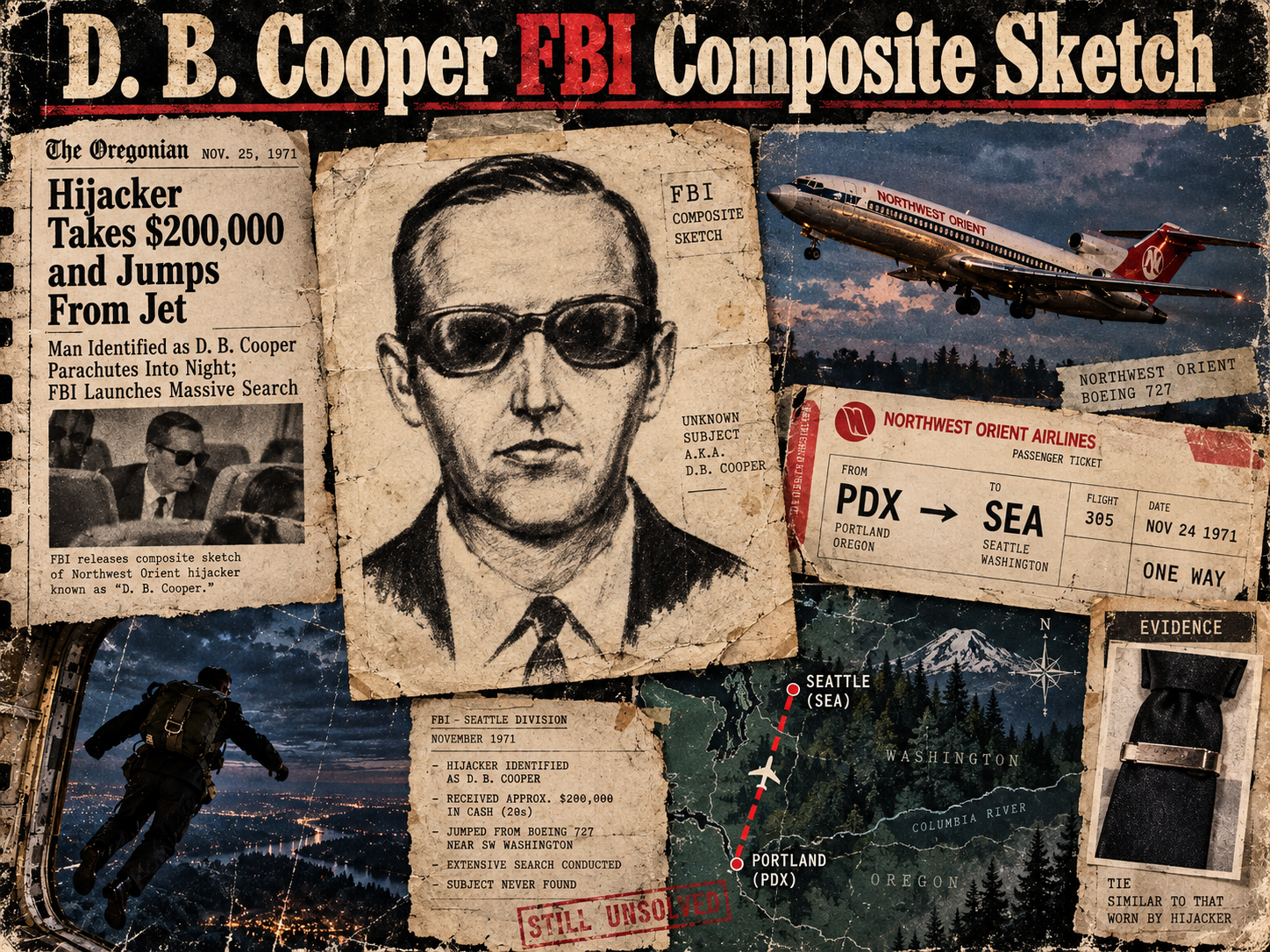
D. B. Cooper FBI Composite Sketch
Investigators created composite sketches of Cooper using the recollections of flight attendants and other witnesses. These sketches became the public face of the case and remain among the most recognizable suspect images in American criminal history. They are not photographs, but visual reconstructions based on eyewitness memory. Even so, they continue to shape how the hijacker is imagined and how suspects are compared.
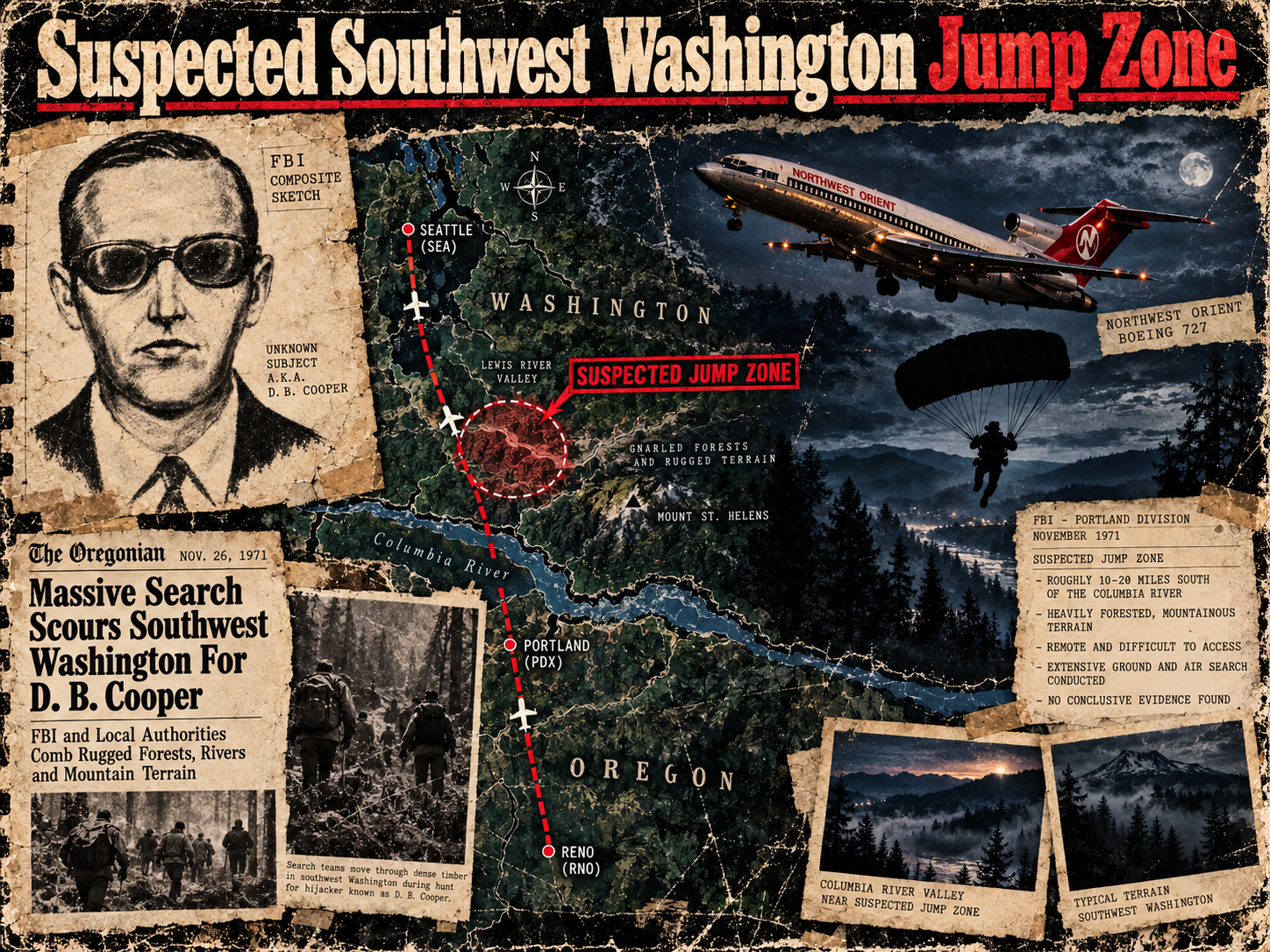
Suspected Southwest Washington Jump Zone
Investigators reconstructed the likely path of the aircraft and estimated that Cooper jumped somewhere over the Pacific Northwest, with southwest Washington often treated as the probable general area. The exact landing site, however, has never been conclusively established. Terrain, weather, darkness, and uncertainty about the precise timing of the jump make reconstruction difficult. The suspected jump zone remains central to every theory about what happened after Cooper left the plane.
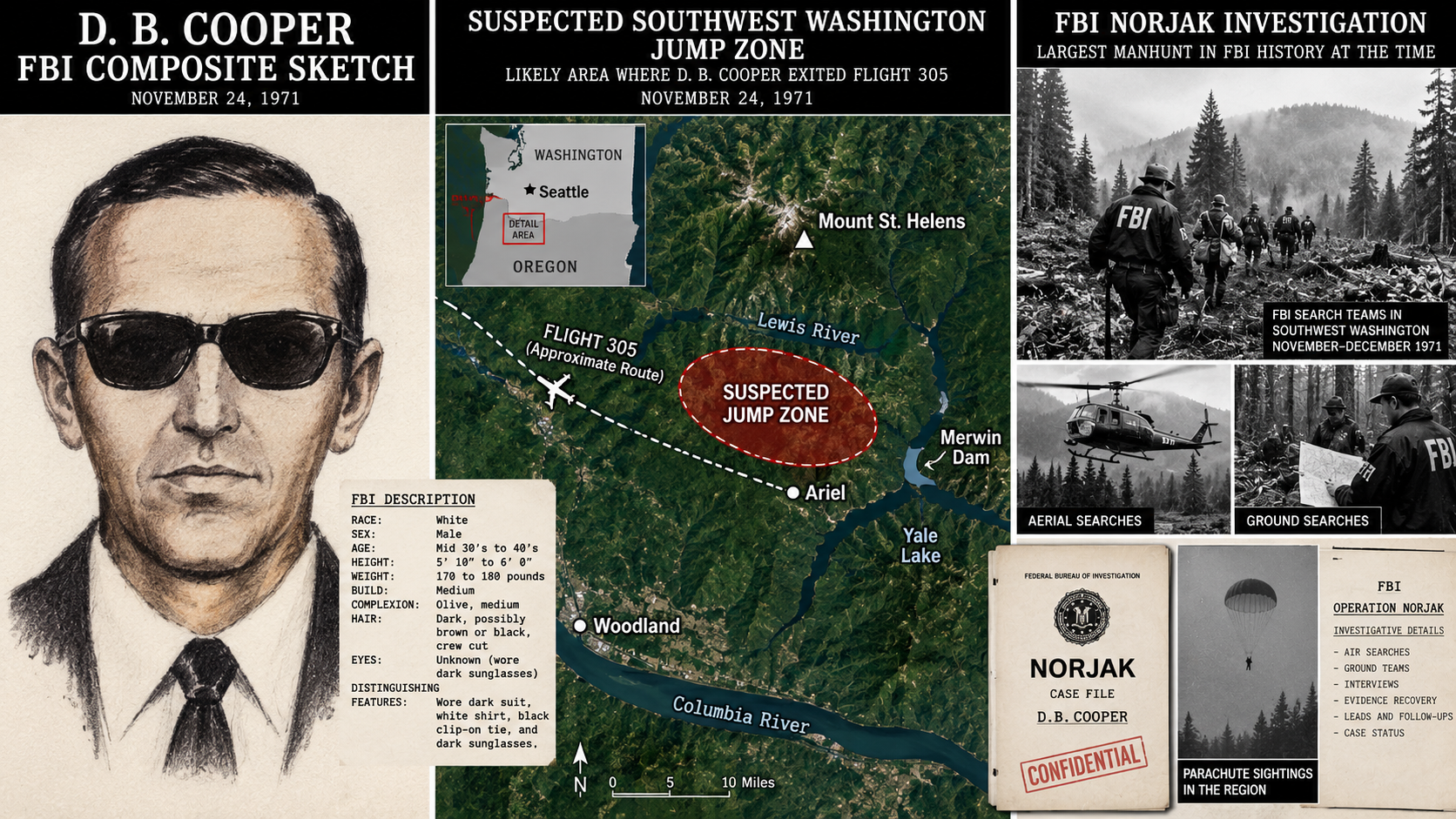
FBI NORJAK Investigation
The FBI investigation into the hijacking became known as NORJAK, short for Northwest Hijacking. Over the years, investigators interviewed witnesses, followed leads, searched possible jump areas, studied physical evidence, and reviewed hundreds of suspects. The case became one of the bureau's best-known unsolved investigations. Even after active resources were reduced, NORJAK remained a defining symbol of a mystery that refused to close.
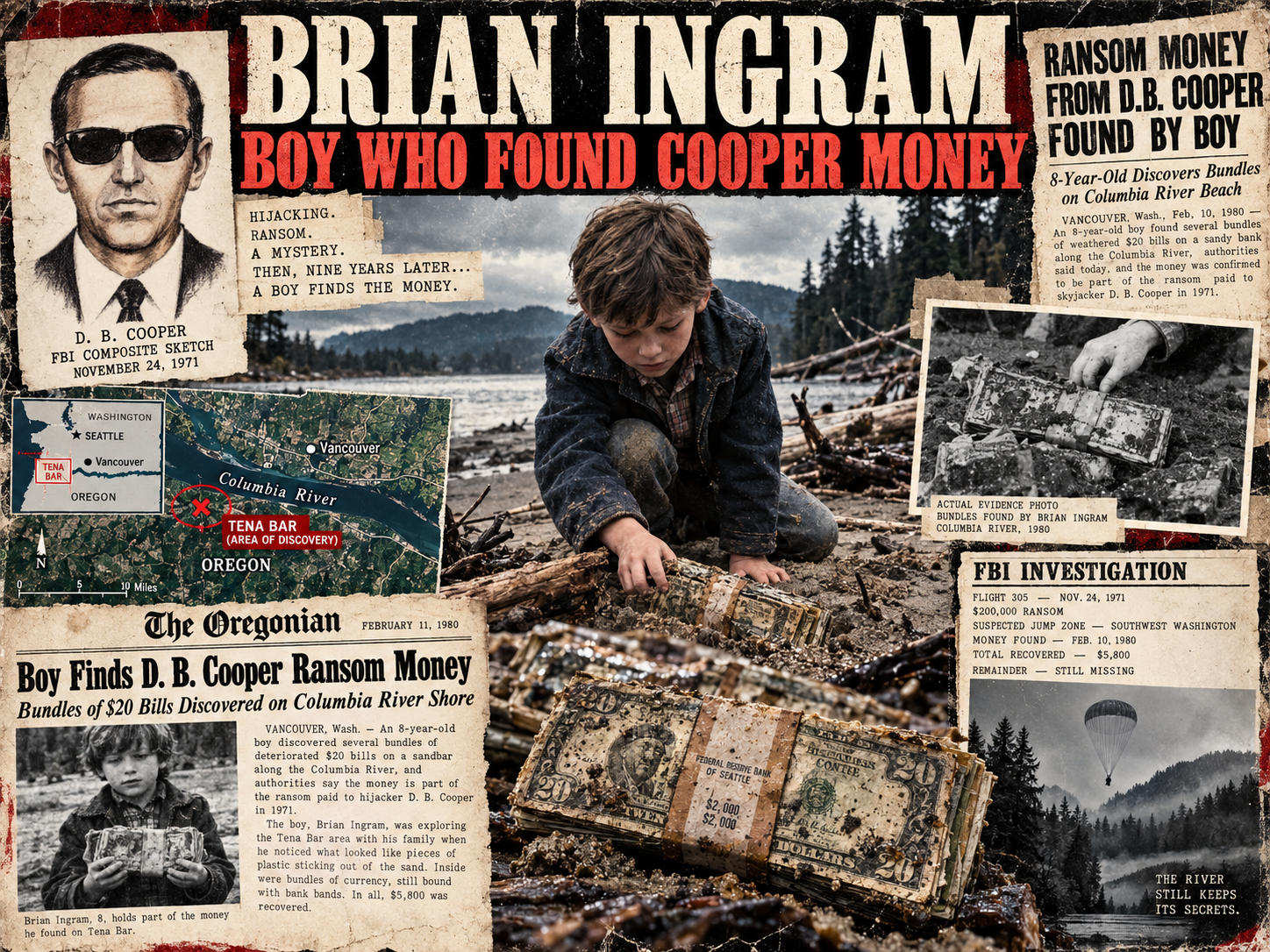
Brian Ingram Boy Who Found Cooper Money
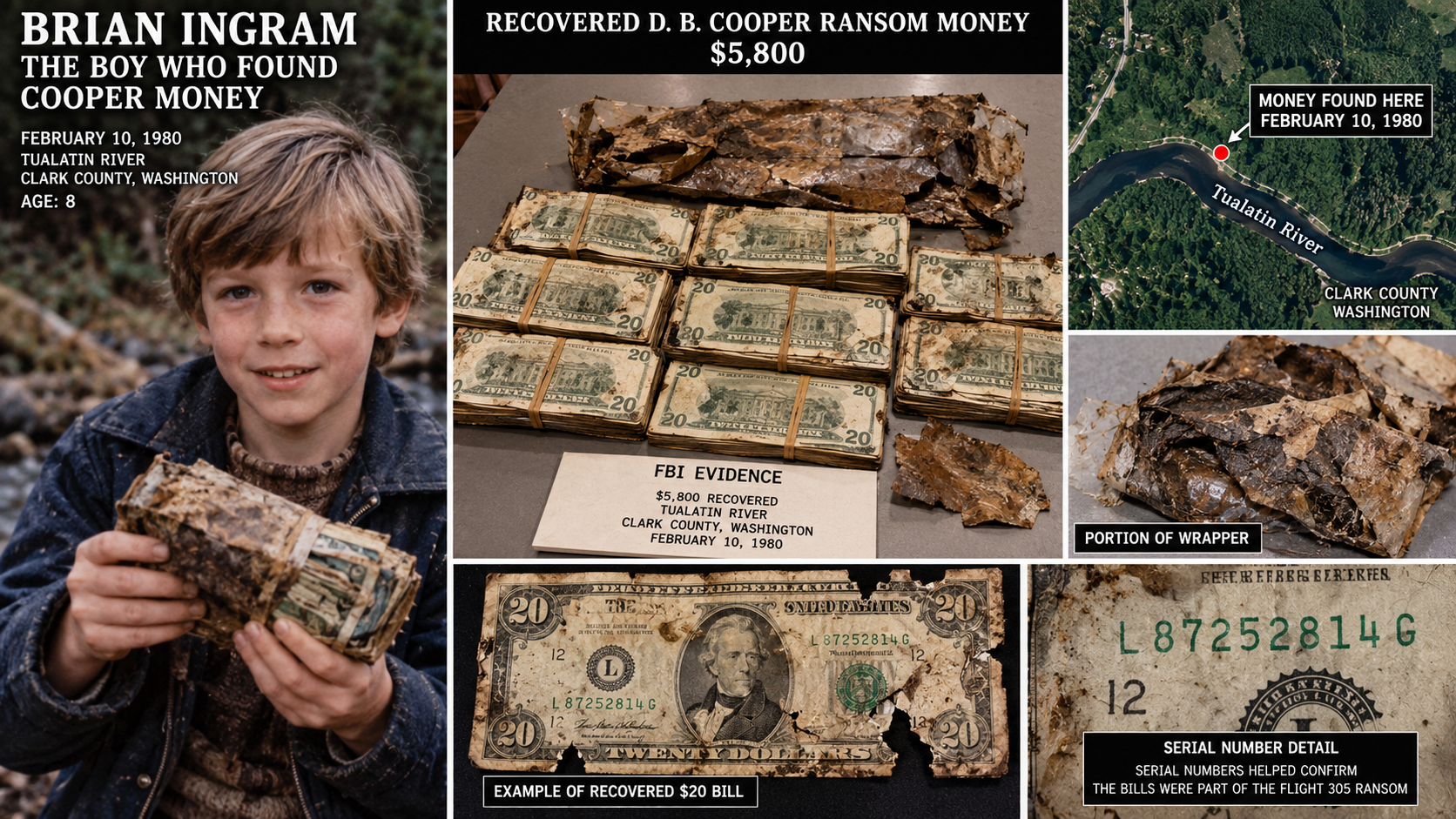
On February 10, 1980, eight-year-old Brian Ingram discovered deteriorating bundles of twenty-dollar bills while on a family outing along the Columbia River in Washington. Investigators confirmed that the serial numbers matched part of Cooper's ransom. His discovery reignited major public interest in the case and provided the first confirmed appearance of any of the missing money. Instead of solving the mystery, however, it opened a new one.
Recovered D. B. Cooper Ransom Money $5,800
The money found by Brian Ingram totaled approximately $5,800 in damaged twenty-dollar bills. The serial numbers matched those of the ransom given to Cooper in 1971, confirming that at least some of the hijacked money survived and later reached the Columbia River area. The bills were found in deteriorated bundles rather than loose circulation. Their discovery became one of the most tangible and haunting pieces of evidence in the entire case.
Tena Bar Columbia River Discovery Site
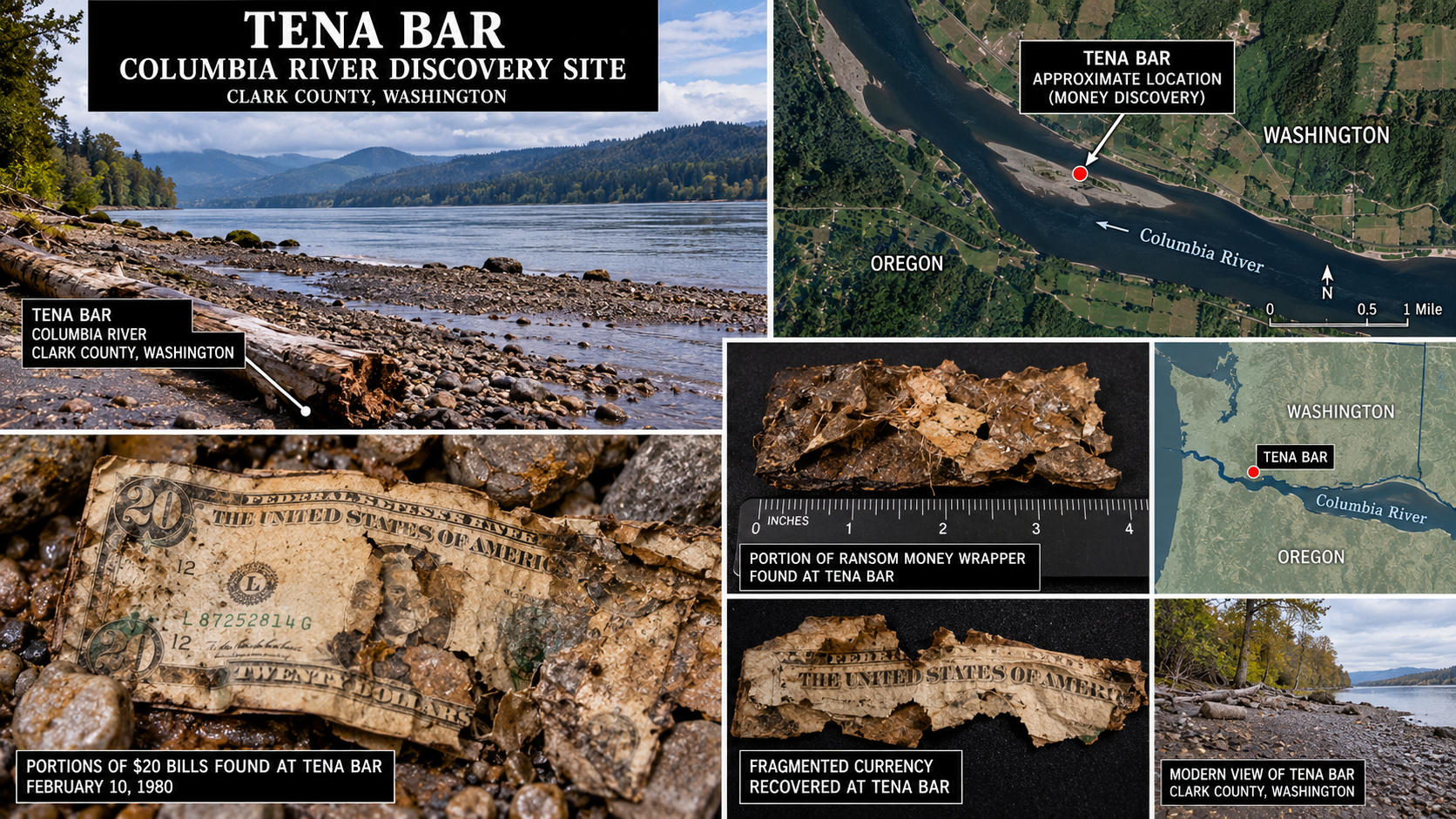
Tena Bar, along the Columbia River in Washington, is the site where part of the ransom was discovered in 1980. This location matters because it does not provide a simple or universally accepted answer to where Cooper landed or died. Instead, it raises difficult questions about river movement, flood deposition, human transport, and the accuracy of earlier flight-path reconstructions. Tena Bar is one of the most debated geographic points in the Cooper mystery.
Richard Floyd McCoy Jr. Cooper Suspect
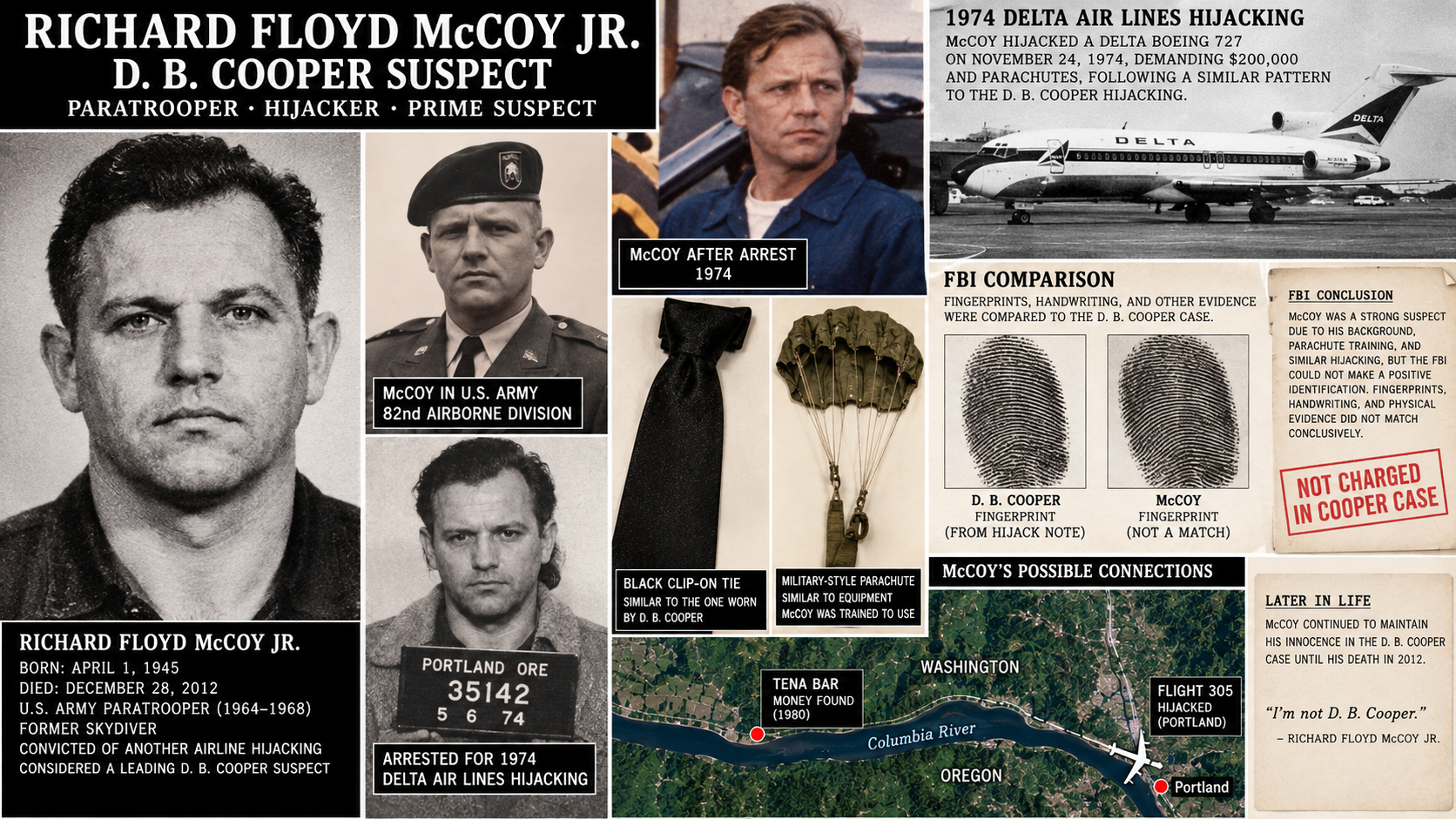
Richard Floyd McCoy Jr. became one of the most famous Cooper suspects because he later carried out a similar skyjacking and escaped by parachute. The resemblance between the crimes ensured that his name remained tied to the case in the public imagination. However, investigators stated that McCoy was ruled out as the hijacker of Flight 305. He remains an important suspect in the history of the case, but not a confirmed solution.
Dan Cooper Comic Book Connection
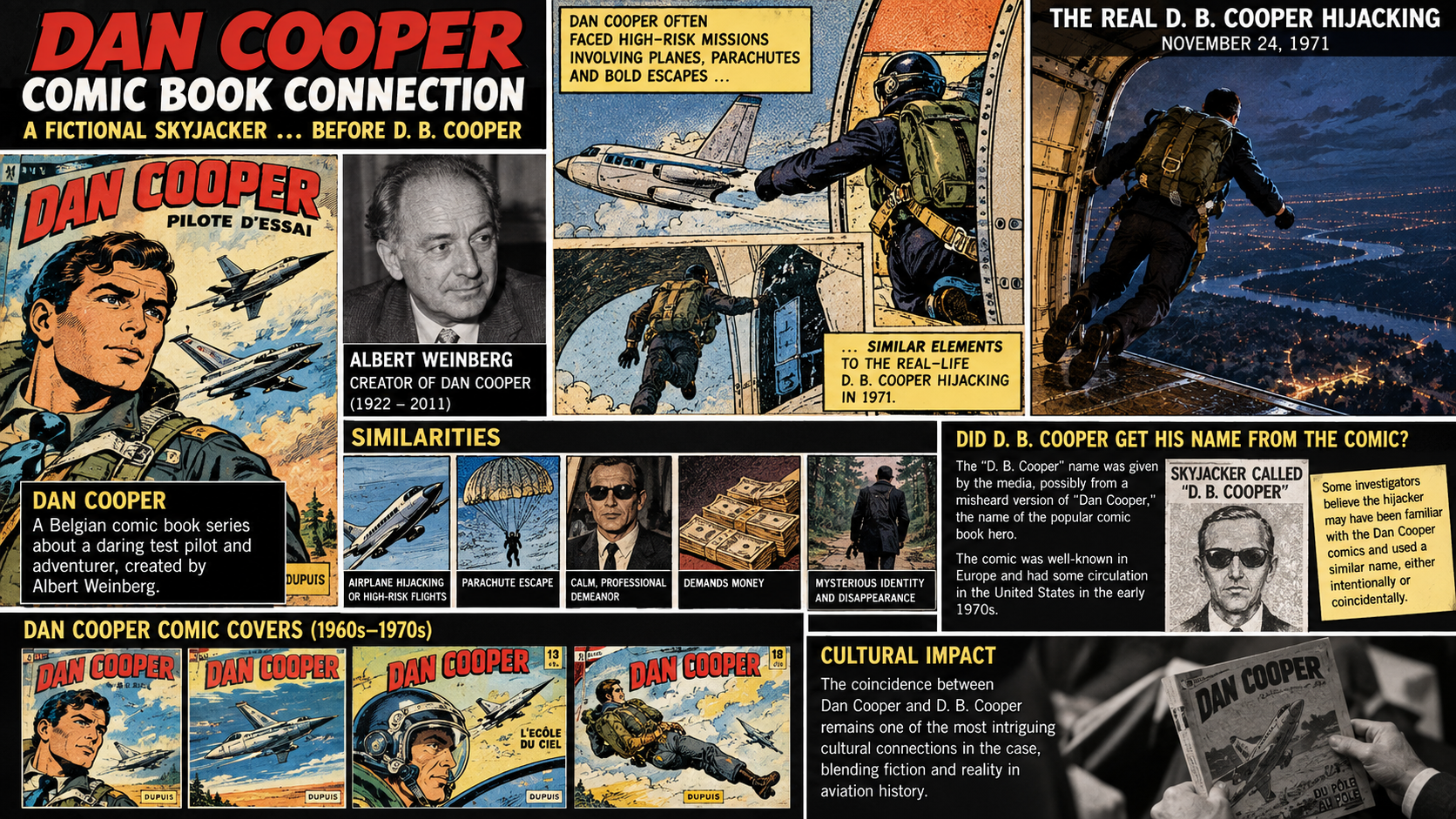
One intriguing detail in the case is the hijacker's use of the name Dan Cooper, which matches the title character of a French-language comic series about a Canadian test pilot. Researchers and enthusiasts have long wondered whether the alias was inspired by those comics. The idea is suggestive because it may hint at cultural knowledge or personal background, but it does not amount to proof of identity. It remains one of the most discussed peripheral clues in the case.
D. B. Cooper Identity Question
The central unresolved question is the true identity of the hijacker who called himself Dan Cooper. Any convincing answer must fit the eyewitness descriptions, timeline, behavior aboard the aircraft, and surviving physical evidence. Many names have been proposed over the decades, but none has been proven conclusively enough to resolve the case. This question sits at the heart of the entire As It Happened board.
D. B. Cooper Survival Question
Did Cooper survive the jump into darkness, bad weather, and rough terrain while carrying a large quantity of cash? The conditions were dangerous, and the FBI long emphasized the possibility that he did not survive. Yet no confirmed body, parachute, or remains have ever been recovered. The answer to this question shapes how every later clue is interpreted.
Tena Bar Money Mystery Question
How did some of the ransom money reach Tena Bar on the Columbia River? Was it carried there by natural river processes, transported by a person, lost during the jump, or deposited long afterward? The location and condition of the recovered bills do not point to a single obvious answer. This question remains one of the most difficult physical puzzles in the case.
D. B. Cooper Bomb Question
Was the device Cooper displayed in his briefcase a real bomb or a convincing fake? Witnesses saw objects that looked like explosive components, but no device was recovered for examination. If it was genuine, the risk he created was enormous. If it was fake, then the hijacking depended on nerve, improvisation, and deception.
Boeing 727 Knowledge Question
How much did Cooper know about the Boeing 727 and its unusual rear airstair? His plan depended on that feature, which has led many observers to suspect aviation, military, or technical knowledge. At the same time, some of his choices have been used to argue that he may not have been a highly trained parachute expert. This question shapes many theories about who he was.
Missing D. B. Cooper Ransom Question
Where is the rest of the $200,000 ransom? Only a small portion of the money has ever been conclusively recovered, and the vast majority remains missing. If Cooper survived, why did the marked bills not clearly re-enter circulation? If he died, why have the cash and related equipment remained largely absent from discovery?